
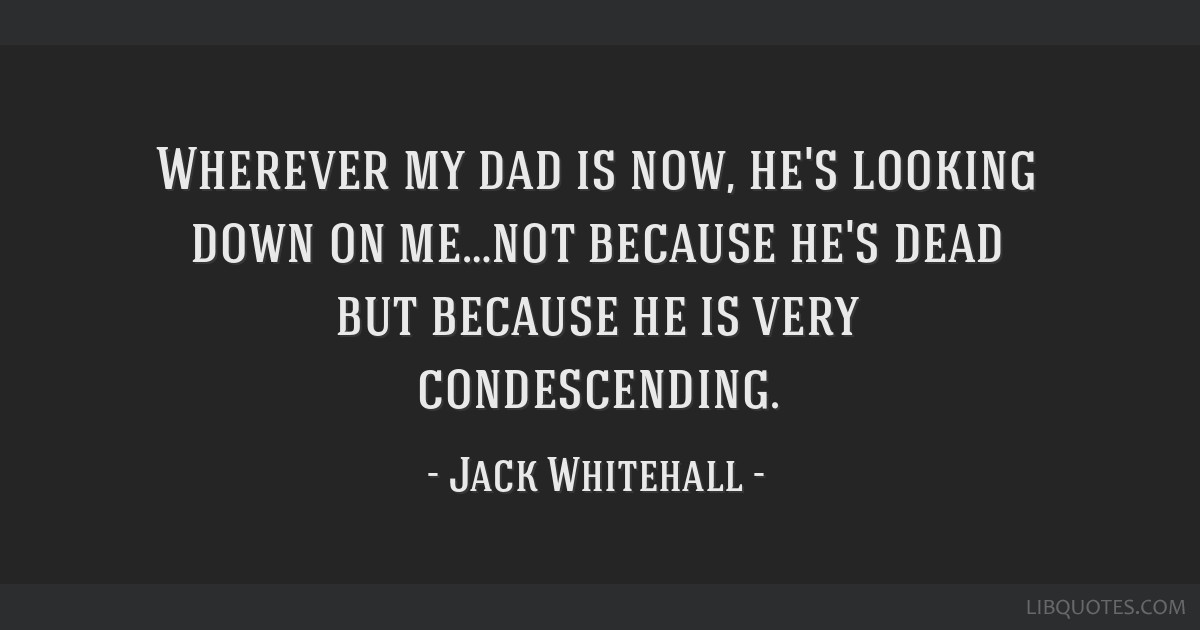
Jack Whitehall’s deadpan delivery of, “I’m sure wherever my dad is, he’s looking down on us. He’s not dead—just very disappointed,” lands like a perfectly timed punchline. But beneath the laughter lies a layered commentary on family, work ethic, and the quiet absurdities of modern life. This isn’t just a throwaway joke—it’s a mirror held up to honesty, workplace dynamics, and the emotional truths we mask with humor.
The quote, often shared as a “quote of the day,” transcends comedy. It encapsulates generational tension, the pressure to perform, and the unspoken expectations that define relationships—especially between fathers and sons. For many, it’s instantly relatable. But what makes it resonate beyond the laugh?
Why This Quote Sticks: The Art of Comedic Truth-Telling
Jack Whitehall built his career on self-deprecating humor and sharp observations about class, family, and social awkwardness. His dynamic with his father, Michael Whitehall, is central to his comedy—especially in travel documentaries like Jack Whitehall: Travels with My Father. The quote, while exaggerated for effect, reflects a real emotional core: the feeling of being perpetually scrutinized by parental standards.
What makes it effective as a “quote of the day” is its duality. On the surface, it’s funny—a classic comedic inversion of the phrase “looking down on us” usually reserved for the deceased. But underneath, it speaks to universal experiences:
- The lingering presence of parental judgment
- The guilt of falling short of expectations
- The use of humor as emotional armor
This blend of vulnerability and wit is why the quote spreads. It’s not just memorable—it’s felt.
Honesty Through Humor: How Comedy Reveals the Unspoken
Great comedy doesn’t just entertain—it exposes truths too awkward, painful, or complex to address directly. Whitehall’s quote is a masterclass in this.
Many people grow up with the sense that their parents are “looking down” on them, not from heaven, but from the sidelines of their lives. The pressure to succeed, to appear competent, to follow tradition—these are silent burdens. Whitehall makes them visible by cloaking them in irony.
Real-life example: In corporate environments, employees often say, “The boss will kill me if this is late,” even when the manager is mild-mannered. The exaggeration reveals real anxiety about performance and approval. Whitehall’s joke operates the same way—just with familial stakes.
Comedians like Whitehall, Ricky Gervais, and Phoebe Robinson use this technique regularly: say the quiet part loud, but make it funny. The result? Audiences nod in recognition before they even realize they’ve been analyzed.
Work Culture and the Myth of Perfection
The quote also indirectly critiques modern work culture. In professional settings, the fear of letting someone down—especially a superior—mirrors the father-son tension Whitehall exaggerates.
Think of the manager who never raises their voice but whose silence speaks volumes. Or the executive whose mere presence in a meeting shifts everyone’s posture. These figures “look down” not from above, but from hierarchies.
Common workplace parallel: - Employee submits a report late → “Oh no, Sarah’s going to murder me.” - Team misses a target → “Wait until the CEO sees this.”
The language is hyperbolic, but the emotional weight is real. Whitehall’s joke highlights how we internalize authority figures as moral arbiters—even when they’re not present.
This dynamic affects mental health, creativity, and innovation. When people fear judgment more than failure, they stop taking risks. Comedy like Whitehall’s helps us laugh at these pressures, which is the first step toward dismantling them.
Human Nature and the Performance of Self
At its core, the quote speaks to a fundamental aspect of human nature: we perform.
We perform competence at work. We perform happiness on social media. We perform respect and success for our parents—even when we’re struggling.
Whitehall’s joke exposes this performance by framing his father as a silent, omnipresent critic. It’s funny because it’s true: many of us feel watched, evaluated, and found wanting—whether by family, society, or our own inner voice.
Psychological insight: The concept of the “internalized parent” is well-documented in psychology. It refers to the mental voice that echoes parental attitudes, often enforcing rules or standards long after childhood. Whitehall’s punchline—“He’s not dead—just very disappointed”—is a pop-culture embodiment of this phenomenon.
This isn’t just about fathers. It’s about how early relationships shape our adult behavior. And how humor helps us confront that inheritance without collapsing under its weight.
Lessons on Honesty: Owning the “Disappointment”
One of the most powerful takeaways from the quote is its challenge to conventional honesty.
Most people avoid admitting they feel judged or inadequate. But Whitehall does the opposite—he leans into it. By exaggerating the disappointment, he disarms it.
Practical application: In team settings, leaders can foster honesty by modeling vulnerability. Saying, “I know this draft isn’t perfect—I’m pretty sure my inner critic is screaming right now,” creates psychological safety. It signals that imperfection is human, not fatal.
Whitehall’s comedy teaches that honesty isn’t just about facts—it’s about emotional transparency. You don’t have to be broken to admit you’re not okay.
Common mistake: Organizations often equate honesty with “telling the truth” in reports or meetings. But real honesty includes acknowledging stress, doubt, and pressure. Without that, culture becomes performative—just like the son trying to impress the silently judging father.
Comedy as a Tool for Cultural Insight
Whitehall isn’t just a comedian—he’s a cultural observer. His work, from stand-up to Netflix specials, dissects Britishness, privilege, masculinity, and emotional repression.
This quote fits that pattern. It’s a micro-commentary on:
- British emotional reserve: The father doesn’t yell. He disapproves. The quiet judgment is more powerful than anger.
- Class and expectation: Whitehall’s upper-middle-class background amplifies the pressure to “succeed properly.”
- Generational change: Younger generations are more open about mental health, but still carry old emotional scripts.
His comedy doesn’t preach. It reveals. And in doing so, it creates space for conversation.
Use case in team development: A manager might use the quote in a workshop on feedback culture. Ask: “Who’s the ‘disappointed dad’ in your head when you make a mistake? How can we make that voice kinder?” It’s an engaging way to discuss internal pressure and organizational tone.
The Enduring Power of a Single Line
Why does this quote endure as a “quote of the day” favorite?
Because it’s compact, relatable, and layered. It works in a tweet, a presentation slide, or a therapy session. It’s funny on first listen, revealing on the fifth.
And it invites reflection: - Who’s “looking down” on you? - What are you trying to prove? - Can you laugh at the pressure instead of carrying it?
That’s the mark of elite comedic writing—not just jokes, but insights disguised as punchlines.
How to Use
This Quote (Without Just Sharing It)
Don’t just retweet it. Use it.
- In leadership training: Spark discussion on emotional intelligence and psychological safety.
- In mental health awareness: Normalize feelings of inadequacy and the weight of expectation.
- In personal reflection: Journal about the “disappointed figures” in your life—and how they shape your choices.
- In comedy writing: Study its structure—setup, misdirection, emotional truth.
The best quotes aren’t just repeated. They’re applied.
Final Thought: Laugh, Then Learn
Jack Whitehall’s quote works because it’s true before it’s funny. It captures the quiet drama of human relationships—the unspoken evaluations, the inherited pressures, the comedy in our collective anxiety.
The next time you feel like someone’s “looking down” on you, pause. Is it real? Is it fair? And could you joke about it?
Because sometimes, the most honest thing you can do is laugh—and finally admit you’re not perfect.
You don’t need to impress the disappointed dad. You just need to be honest about why you thought you did.
FAQ
What should you look for in Jack Whitehall’s Quote of the Day: Humor, Honesty, and Human Truths? Focus on relevance, practical value, and how well the solution matches real user intent.
Is Jack Whitehall’s Quote of the Day: Humor, Honesty, and Human Truths suitable for beginners? That depends on the workflow, but a clear step-by-step approach usually makes it easier to start.
How do you compare options around Jack Whitehall’s Quote of the Day: Humor, Honesty, and Human Truths? Compare features, trust signals, limitations, pricing, and ease of implementation.
What mistakes should you avoid? Avoid generic choices, weak validation, and decisions based only on marketing claims.
What is the next best step? Shortlist the most relevant options, validate them quickly, and refine from real-world results.