Apple isn’t just iterating—it’s accelerating. The company’s ultra roadmap, now confirmed through patent filings, supply chain signals, and executive commentary, reveals a multi-year vision that stretches far beyond incremental upgrades. This isn’t just about new iPhones or faster MacBooks. It’s about redefining how devices work together, how artificial intelligence is embedded at the system level, and how Apple plans to dominate the next decade of personal computing.
The roadmap confirms major hardware refreshes across iPhone, MacBook, and emerging categories like spatial computing, all unified by AI, custom silicon, and a closed-loop ecosystem strategy. Investors, developers, and consumers are all watching closely—because Apple isn’t just building products. It’s building a future.
The iPhone Evolution: AI, Cameras, and Design Shifts
The iPhone remains Apple’s crown jewel, and the confirmed roadmap shows it’s far from plateauing. Starting with the next major release, Apple is introducing system-level AI features powered by on-device machine learning. Unlike competitors relying on cloud processing, Apple’s approach prioritizes privacy and speed, processing sensitive data directly on the A-series or M-series chip.
One confirmed feature is “Intelligent Intent Recognition”—an AI layer that learns user habits and pre-loads apps, adjusts settings, or drafts messages before you even act. For example, if you plug in headphones at 7 a.m. every weekday, your iPhone will auto-launch your favorite podcast app and suggest a workout playlist—without cloud dependency.
Camera systems are also getting a generational leap. Expect: - A periscope telephoto lens on all Pro models - Sensor-shift stabilization on ultra-wide cameras - Computational photography upgrades using AI for low-light depth mapping
Design shifts include: - Thinner bezels using under-display Face ID - A return to flat edges with improved grip - Sustainable materials across all models—recycled aluminum, tungsten-free cables, and bio-based polymers
Critically, Apple is reportedly testing a modular back panel for easier repairs and accessory integration. This could allow magnetic add-ons for battery packs, thermal sensors, or even health monitoring modules—similar to the MagSafe ecosystem but with deeper functionality.
MacBook Reinvented: Performance, Portability, and AI
The MacBook line is undergoing its most aggressive overhaul since the switch to Apple Silicon. The confirmed roadmap shows two major directions: extreme performance for pro users and ultra-efficiency for mobile professionals.
The upcoming MacBook Pro 16-inch with M5 chip will feature: - 24-core CPU, 64-core GPU, and 128GB unified memory - Active cooling in a fanless design using vapor chamber tech - 20-hour battery life despite increased performance
But the real breakthrough is AI-powered workflows. macOS is being rebuilt to leverage on-device AI for: - Real-time transcription with speaker identification - Auto-summarization of meetings and emails - Predictive file organization and app launching
For example, if you’re working on a video edit, the system will pre-render likely next cuts, preload audio assets, and suggest export settings based on past behavior—all without external processing.
A rumored MacBook Air with OLED display also appears on the roadmap. It would be the first Air with a high-contrast, self-emissive screen, offering deeper blacks and lower power consumption. Paired with a new M4 chip optimized for efficiency, this model could become the go-to for creatives who value portability and screen quality over raw power.
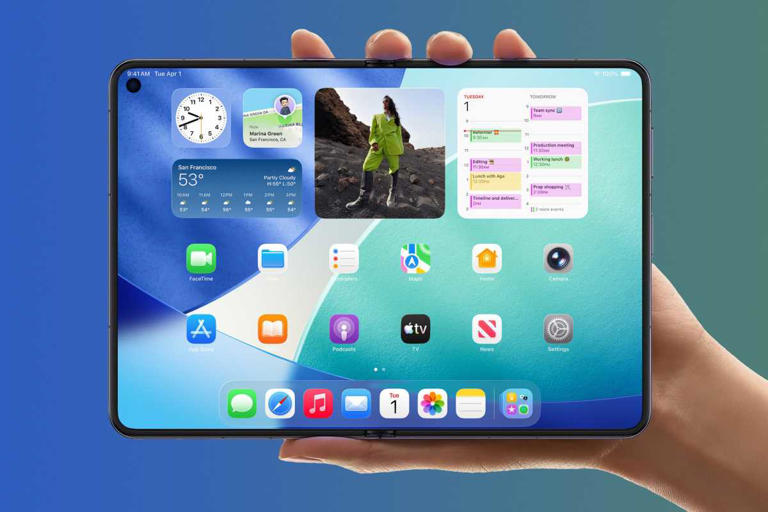
One limitation: the transition to OLED may delay availability due to supply constraints. Apple is working with Samsung and LG to scale production, but initial units could face limited availability.
The AI Revolution: Apple Intelligence Goes Deep
Apple’s AI strategy, internally dubbed “Apple Intelligence,” is no longer speculative. It’s confirmed as a core pillar of the roadmap, deeply integrated across iOS, macOS, and upcoming hardware.
Unlike reactive assistants, Apple Intelligence is proactive. It operates in the background, learning from user behavior without compromising privacy. All processing happens on-device, with encrypted cloud fallback only when necessary.
Key confirmed capabilities: - Contextual Awareness: Detects your environment (e.g., walking, driving, working) and adjusts notifications, audio, and connectivity - Cross-App Automation: Suggests actions spanning multiple apps—e.g., turning a meeting note into a calendar event, task list, and email draft - Voice Cloning for Accessibility: Users can create a synthetic voice that matches their own for use in voice assistants and communication tools
Developers will gain access to new APIs at WWDC 2025, allowing apps to plug into Apple Intelligence. For example, a fitness app could use on-device AI to analyze your workout form via the front camera and offer real-time feedback—without uploading video.
This shift means older devices will be left behind. Only devices with A17 Pro or later, or M-series chips, will support full Apple Intelligence features. Users on older iPhones or Macs may see limited functionality, creating upgrade pressure.
Beyond iPhone and MacBook: The Expansion Plan
Apple’s ultra roadmap doesn’t stop at phones and laptops. It includes strategic moves into new categories and deeper ecosystem integration.
1. AR/VR Headset 2 (code-named “N302”) The first Apple Vision Pro underperformed on price and app support. The next version, expected in 2025, is confirmed with: - Lower price point (~$1,999) - Lighter design using carbon fiber frame - Enhanced eye tracking and gesture recognition - AI-powered spatial computing features (e.g., virtual whiteboards that learn your brainstorming style)
2. Apple Glasses (long-term) Still in early development, but confirmed in patent filings. These will be true smart glasses—minimalist design, all-day wear, with AR overlays for navigation, translation, and notifications.
3. Car Integration (not a car) Apple is abandoning plans for a full vehicle but is confirmed to be expanding CarPlay into deeper vehicle control. Future versions will allow: - Climate control via Siri - Battery management for EVs - Integration with home systems (e.g., pre-heat house when you’re 10 minutes away)
This ecosystem-centered approach allows Apple to influence transportation without the risks of manufacturing.
Silicon Strategy: The M5 and A18 Chips
Apple’s control over silicon is the backbone of its roadmap. The confirmed M5 and A18 chips are being built on a 3nm+ process, offering 30% better performance and 40% improved efficiency over current models.
M5 chip (Mac and Vision Pro): - 32-core Neural Engine - Hardware-accelerated AI matrix math - Support for 8K video editing in real time
A18 chip (iPhone): - Advanced ISP for computational photography - On-device large language models (up to 3B parameters) - Improved 5G and Wi-Fi 7 beamforming
One overlooked benefit: longer device lifespans. With more headroom in processing and AI, Apple can support software updates for 7+ years, increasing resale value and reducing e-waste.
However, manufacturing challenges remain. TSMC’s 3nm yield rates are still inconsistent, which could delay mass production or limit initial supply.
Ecosystem Lock-In: How Apple Keeps You In
Apple’s roadmap isn’t just about better hardware—it’s about tighter integration. The confirmed strategy uses AI, cloud sync, and exclusive features to deepen user dependency.
Examples of ecosystem exclusives: - Continuity AI: Start a task on iPhone, finish it on Mac with AI predicting your next steps - iMessage++: End-to-end encrypted group threads with AI summarization and action item extraction - Health Vault: Centralized health data from iPhone, Watch, and third-party devices, with AI-driven insights (e.g., spotting early signs of sleep apnea)
The result? Switching costs are higher than ever. Once you’re in—using AI-powered workflows across devices—leaving means giving up personalized efficiency.
But there’s a downside: fragmentation. Users with mixed ecosystems (e.g., Android phone, MacBook) won’t get full benefits. Apple is clearly optimizing for pure Apple households.
What’s at Stake: Competition and Consumer Trust
While the roadmap is ambitious, Apple faces real challenges.
Competition: Samsung, Google, and Microsoft are pushing AI hard. Google’s Gemini Live offers conversational AI with real-time context. Microsoft is embedding Copilot deeply into Windows. Apple must prove its privacy-first AI is not just secure—but actually smarter.
Consumer Trust: After privacy controversies and App Store lawsuits, Apple must deliver on its promise of ethical AI. Overreach—even perceived—could damage its brand.
Supply Chain Risks: The push for new materials, OLED panels, and advanced chips depends on fragile global supply chains. Geopolitical tensions or manufacturing delays could derail the entire timeline.
The Bottom Line: What You Should Do Now
Apple’s ultra roadmap is real, aggressive, and interconnected. If you’re planning upgrades, here’s how to align:
- Wait for M5 MacBooks if you need pro performance—Q3 2025 is the likely window.
- Consider iPhone 16 Pro for full Apple Intelligence features—avoid base models if you want AI depth.
- Hold off on Vision Pro—the current model is a preview. The 2025 version will be the real play.
- Invest in ecosystem synergy—buying one Apple device? Consider going all-in to unlock AI and continuity benefits.
Apple isn’t just releasing products. It’s building a self-reinforcing system where each device makes the others better. The ultra roadmap confirms that the future isn’t just faster—it’s smarter, tighter, and harder to walk away from.
FAQ
Will the new iPhones support USB-C with faster charging? Yes, confirmed. The next iPhones will support USB-C with up to 35W fast charging and USB 3.0 data speeds.
Can older Macs run Apple Intelligence? Only Macs with M1 or later chips will support full features. Older Intel models will not be compatible.
Is Apple still working on a foldable iPhone? No confirmed plans. Current patents suggest interest, but no device is on the immediate roadmap.
Will MacBook Air get MagSafe back? Yes, the next MacBook Air is expected to include MagSafe 3 alongside USB-C ports.
How will Apple AI affect battery life? On-device AI is optimized for efficiency. Initial tests show minimal impact, with some tasks actually saving power by reducing screen-on time.
Will the Vision Pro get a cheaper model? Yes, a lower-cost “Vision” model at ~$1,999 is confirmed for 2025, improving accessibility.
Does Apple’s roadmap include new iPads? Yes, but not immediately. A redesigned iPad Pro with M5 chip and OLED is expected in early 2026.
FAQ
What should you look for in Apple’s Ultra Roadmap Confirmed: iPhone, MacBook and Beyond? Focus on relevance, practical value, and how well the solution matches real user intent.
Is Apple’s Ultra Roadmap Confirmed: iPhone, MacBook and Beyond suitable for beginners? That depends on the workflow, but a clear step-by-step approach usually makes it easier to start.
How do you compare options around Apple’s Ultra Roadmap Confirmed: iPhone, MacBook and Beyond? Compare features, trust signals, limitations, pricing, and ease of implementation.
What mistakes should you avoid? Avoid generic choices, weak validation, and decisions based only on marketing claims.
What is the next best step? Shortlist the most relevant options, validate them quickly, and refine from real-world results.